

AI Agents Built for Lending SaaS Platforms
Deflect repetitive origination, underwriting, and servicing questions. Diagnose API and integration errors faster. Resolve roles, permissions, and SLA escalations with confidence. Built for secure, accurate support at scale.

The Challenge
Industry Dynamics & Roadblocks
Spiky launch-day volume
Ticket spikes bury your team
Every product release, API change, or new lender onboarding sends support volume through the roof. Repetitive Tier-1 questions pile up while your specialists get pulled off the high-value work that actually needs them.
SLA clocks never stop
Slow answers put SLAs at risk
Lenders run time-sensitive loan servicing and expect fast, contract-backed response times. When integration errors or servicing questions sit in a queue, you breach SLAs and put renewals on the line.
One wrong answer, real exposure
Compliance leaves no room for error
Support touches regulated territory: disclosures, fee calculations, audit trails, and borrower data. A single inaccurate or non-compliant reply can trigger regulatory exposure and erode the trust your lenders depend on.
Example Impact for Lending SaaS Teams
- $250K
- Revenue Retained
- Illustrative annual revenue retained by reducing churn drivers and preventing high-stakes workflow and integration issues from dragging on.
- 30s
- Time to Answer
- Average time for an AI-assisted first answer on common Tier-1 questions, so lender users are not waiting on backlogs or escalation queues.
- 100%
- Coverage
- Coverage across core lending SaaS workflows like origination, underwriting configuration, servicing events, integrations, roles, and reporting, with safe routing and escalation.
- 60%
- Lower Cost Per Ticket
- Less back-and-forth, better routing, and higher self-serve deflection reduces the cost of each resolved issue.
- 3x
- Agent Throughput
- Agents handle more tickets per day with AI-drafted replies, summaries, and suggested next actions that keep answers consistent.
What If You Could Scale Support Without Sacrificing Accuracy?
What if your support team stopped answering the same integration, API, and configuration questions all day?
What if every customer received an answer that reflected their configuration, permissions, and workflow, not a generic template?
What if every ticket arrived with the right context, suggested next actions, and a clean handoff when a human is needed?
Auralis AI agents make this possible. They turn lending SaaS support into a proactive, measurable, and scalable function, without sacrificing accuracy.
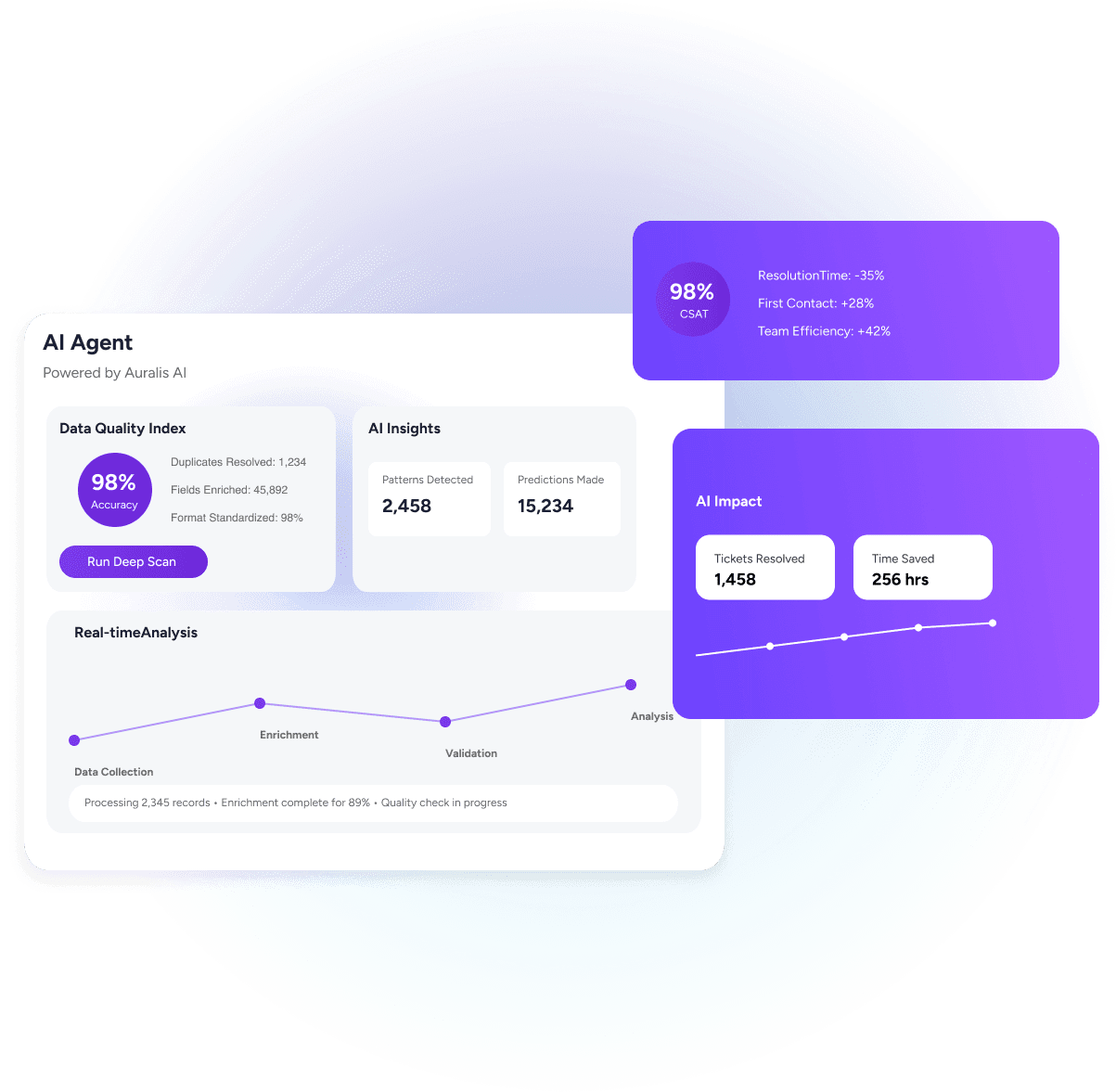
Support Coverage
Common Support Use Cases
Integrations and Data Sync
Guide customers through core system connections, data imports, SSO setup, and API integrations. Diagnose common errors and escalate with the right logs and context.
Billing, Plans and Subscriptions
Resolve invoices, contract entitlements, seat counts, usage limits, renewals, and account changes quickly and consistently.
Loan Reporting and Data Reconciliation
Explain why pipeline or portfolio numbers do not match, how to fix data mapping issues, and how to run the right loan reports and exports.
Security, Permissions and Audit Trails
Answer role and permission questions safely, keep responses tenant-aware, and maintain an auditable trail of what was recommended or changed.
Workflow Configuration and Loan Products
Help admins configure loan products, stages, decisioning policies, and servicing workflows with clear, step-by-step guidance and safe guardrails.
APIs, Webhooks and Integrations
Support developers and admins with integration setup, API errors, webhooks, and data mapping, while collecting the details engineering needs to reproduce issues.
Exceptions and Stalled Applications
Surface patterns like duplicate applications, stalled stages, missing documents, or failed downstream events, and route the right context to the right team for review.
Support Insights and Product Feedback
Turn ticket volume into actionable insights by surfacing recurring issues, trend shifts, and top drivers, so product and engineering teams can fix the root causes.
Escalations with Full Context
Detect high-risk cases and route them to the right specialists with conversation history, account context, and recommended next steps.
Trusted by Industry Leaders
Below is an anonymized scenario of how a pure B2B lending SaaS platform uses Auralis to reduce support cost to serve, speed up resolution on complex workflows and integrations, and keep answers consistent across channels.
A mid-market lending platform SaaS provider serving banks and credit unions faces predictable support surges during lender onboarding and integration projects: API authentication failures, webhook payload mismatches, workflow configuration questions, and reporting exports. Escalations can pull engineering into support, while inconsistent answers increase frustration and churn risk. Auralis drafts accurate, tenant-aware replies, attaches clean context to engineering escalations, and keeps answers consistent so teams scale support without lowering the bar on accuracy.
- Headquarters
- UK
- Industry
- Lending SaaS
- Annual Loan Applications
- 1M+
Lender onboarding and integrations used to overwhelm our team. With Auralis, we can answer common workflow and API questions faster, and escalations reach engineering with clean context and steps to reproduce. Customers get clearer guidance, agents stay focused, and we can scale without lowering the bar on accuracy.
 Jason LiuSupport Operations Lead
From Manual Support to Intelligent Assurance
See how Auralis transforms your lending SaaS support operation
Manual Support
- Answers to integration, API, and configuration questions are scattered across tickets, docs, and Slack; agents search and retype
- Tier-0/1 questions repeat, queues spike at month-end and release cycles, and SLAs slip
- Replies ignore each customer's tenant, permissions, and workflow, defaulting to generic templates
- Compliance and audit trails are manual, leaving blind spots on sensitive lending data
- Onboarding new agents to the platform's complexity takes weeks
Intelligent Assurance
- Cited answers from tickets, docs, logs, and release notes, tenant- and permission-aware and ready to send
- Smart Assist drafts replies, prompts for missing steps, and captures notes in one click
- Every reply reflects the customer's configuration, permissions, and workflow, never a generic template
- Permission-aware answers and full audit trails keep every response compliant across sources
- New agents ramp in days with AI-drafted guidance and next-best actions
AI Agents
AI agents for Lending SaaS
Purpose-built agents that handle the support work that fills your queue.
Onboarding & Setup Agent
Walks new lender teams through platform configuration and loan-product setup without opening a support ticket.
Escalation & Triage Agent
Routes urgent lender and borrower issues to the right specialist fast, with full account and case context.
Billing & Subscription Agent
Answers plan, invoice, and usage questions and resends statements the moment a customer asks.
Account & Access Agent
Handles user provisioning, roles, and permission questions without pulling in your admins.
Live Chat Agent
Answers lender and borrower chat instantly without tying up your support team.
Email Support Agent
Keeps lender support email moving with drafted, cited replies around the clock.
Designed to save hours every week per agent with Auralis Agent Assist, integrated into your helpdesk to improve your team's efficiency by:
Smart Reply Drafting
Auralis drafts accurate replies for loan workflow configuration, underwriting rules, API and integration errors, reporting questions, permissions, and billing by using your product context and documentation.
CRM and Billing Sync + Summarization
Automatically summarizes conversations and updates your CRM, contract and billing notes, and internal systems so account context stays current without manual copy-paste.
AI-Powered Ticket Triage and Resolution
Classify and route tickets by topic, urgency, and account tier, recommend next-best actions, and deflect repeat questions with safe, product-specific answers.
Turn Agent Expertise into Shared Knowledge
Train Auralis using your ticket history so your best agents can improve the AI quickly. A knowledge base article can be created from that training so the entire support team benefits from shared, up-to-date guidance.
Featured Resources
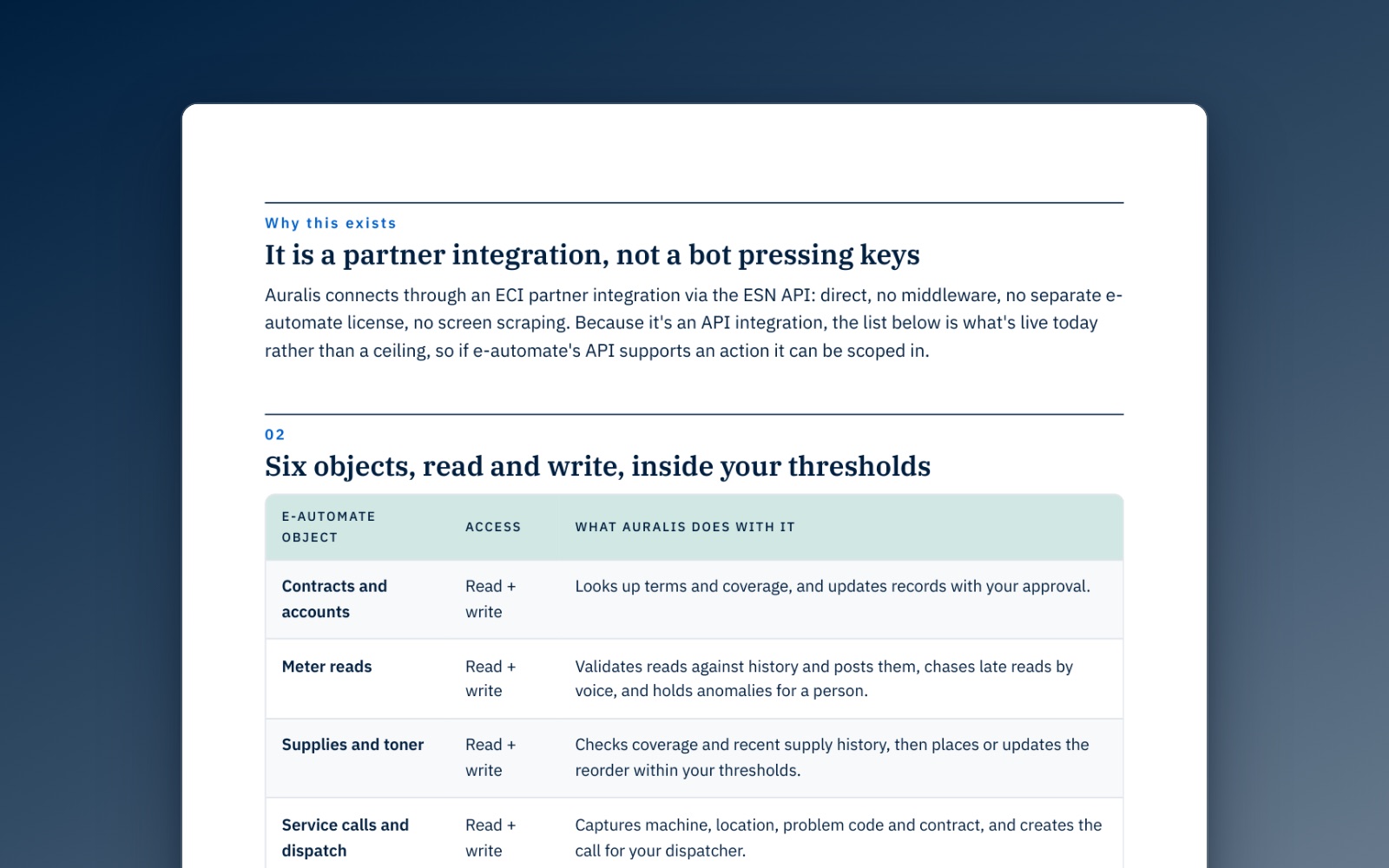
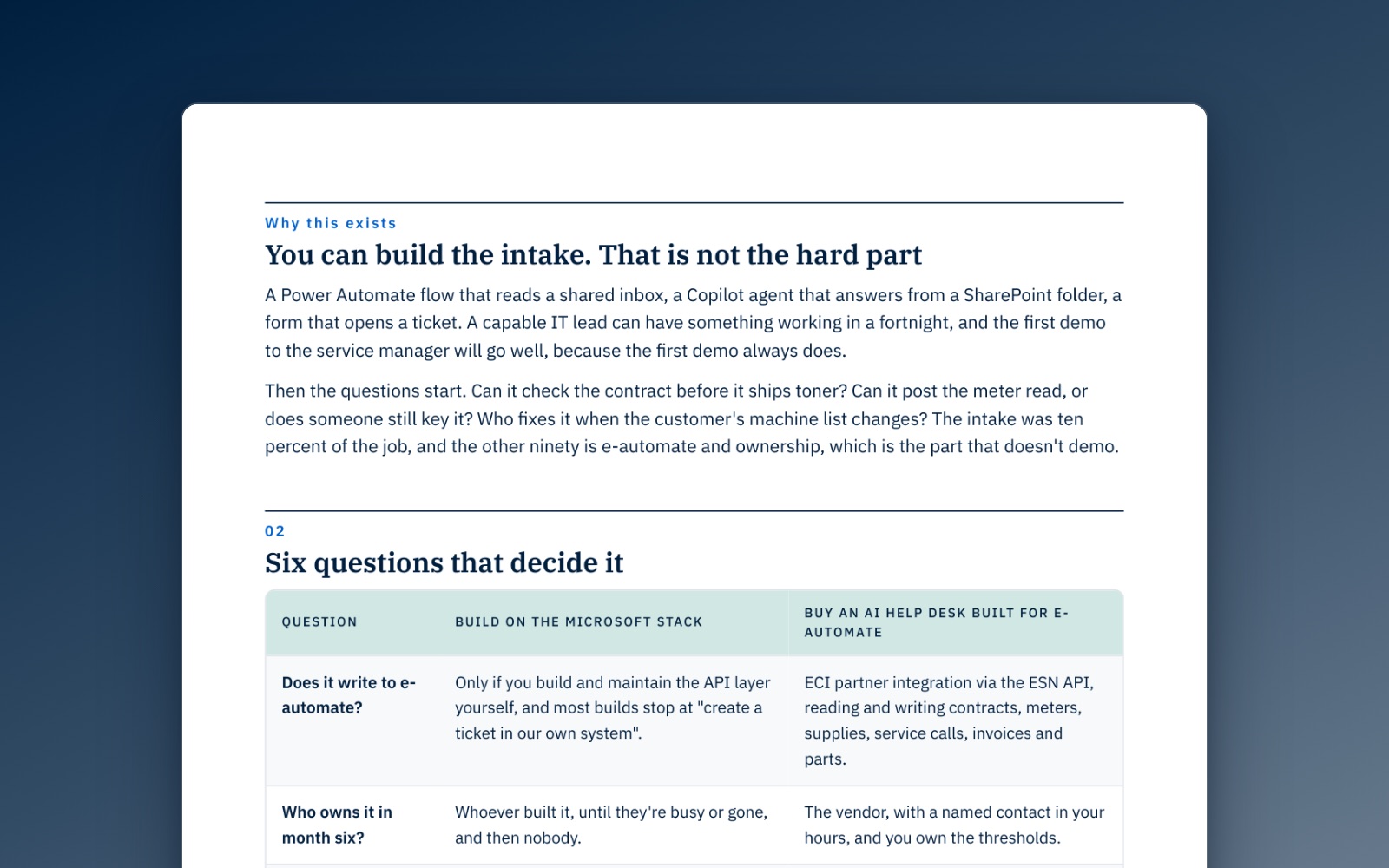
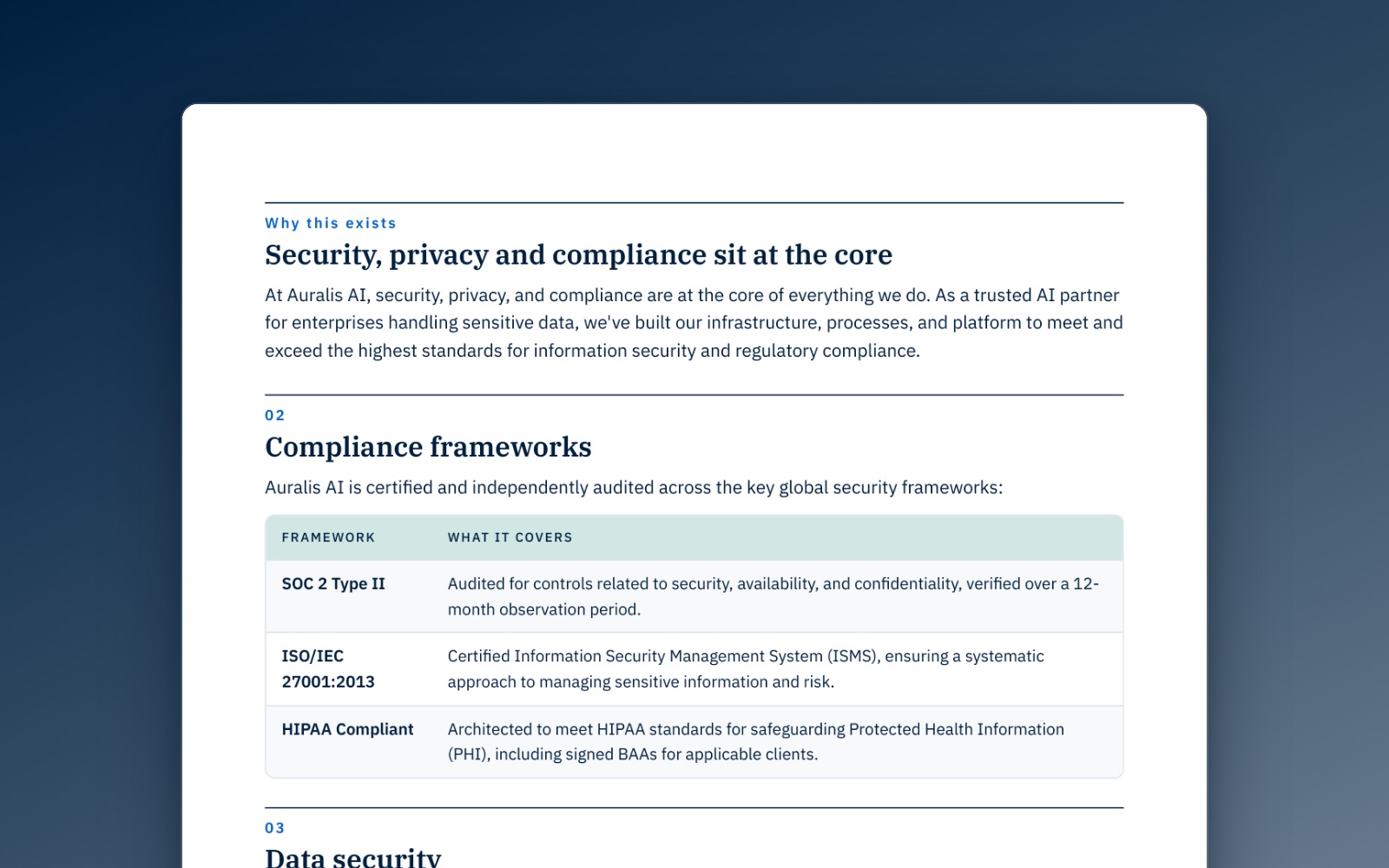
Written for the dealer evaluating an AI help desk on e-automate, and for the IT director who has to sign it off.
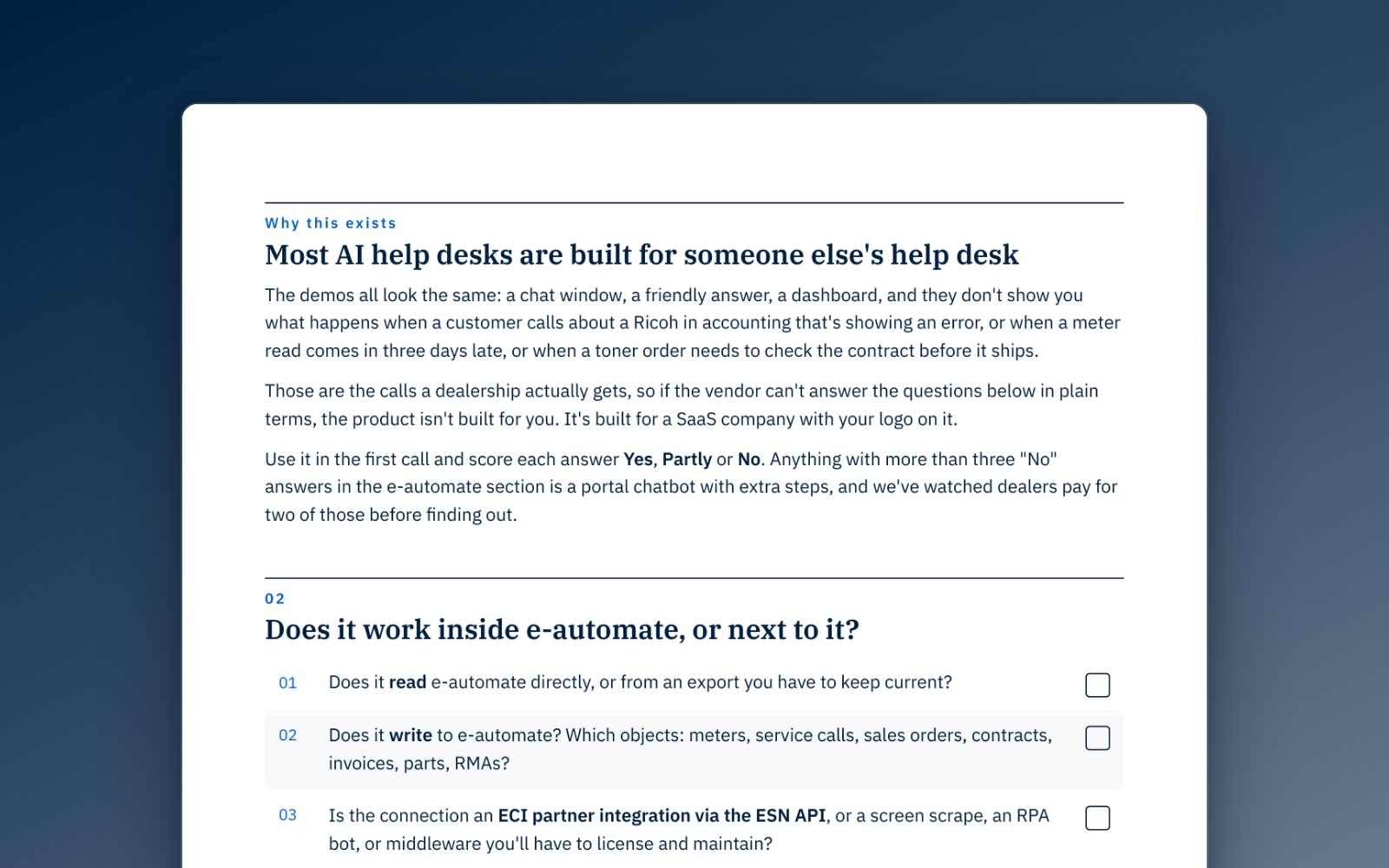
The e-automate AI help desk checklist
Twenty questions to ask any vendor before their AI touches your meter reads, your dispatch board, or your e-automate. Does it write to e-automate or just read an export? What happens to a read outside the variance? Who runs it in month six? Score each answer in the first call.
Get the checklist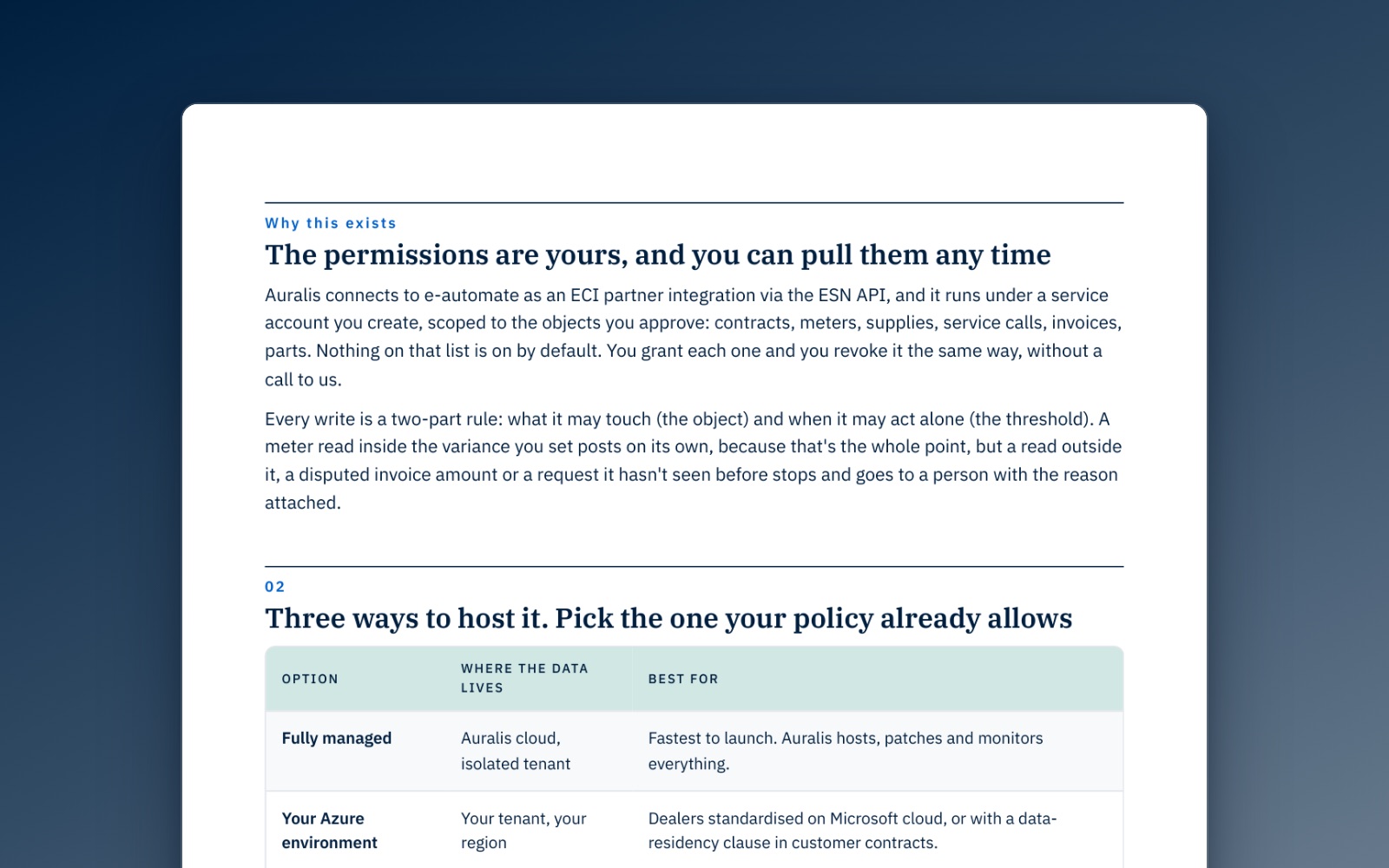
FAQ
Auralis scales to match volume automatically. During lender onboarding projects and integration sprints, which are the most predictable sources of ticket spikes, Auralis drafts context-aware replies for the most common categories: API authentication errors, webhook configuration issues, workflow setup questions, and reporting exports. Agents review and send rather than composing from scratch, which means your team processes significantly more tickets per shift during the periods when demand is highest, without expanding headcount or missing SLAs.