

Fast Implementation, Zero Bloat: What Enterprises Gain from Managed AI Solutions

October 29, 2025 · 8 min read

On this page
The fastest way to stall an AI initiative is to choose a platform weighed down by features no one needs.
Enterprises are racing to deploy AI, rightfully so, but the last thing they want is a bulky, slow-moving system that complicates instead of simplifies. These bloated platforms delay time to value, demand steep learning curves, and drain resources, giving competitors a head start.
Managed AI solutions offer a powerful alternative.
They deliver agility, efficiency, and measurable impact without excess complexity. By offloading infrastructure, maintenance, and customization burdens, enterprises can focus on solving real business problems.
In this blog, we’ll break down why traditional AI stalls, and how managed AI fixes it with a faster, leaner way forward.
Why do enterprises struggle with traditional AI implementations?
Despite the excitement around AI, many enterprise initiatives falter before delivering value. Too often, the technology itself is blamed as the misfit, but in reality, it’s the complexity of implementation that causes these projects to fall short.
Traditional deployments demand long timelines, heavy customization, and deep reliance on internal or external experts. Such an implementation is expensive, slow, and difficult to scale.
Long setup cycles
One of the biggest challenges with traditional AI is the time it takes to deploy. Projects often stretch into months as teams wrestle with provisioning infrastructure, building data pipelines, training models, and testing integrations across complex systems.
By the time everything is in place, business priorities may have shifted, customer expectations may have evolved, and competitors may already be experimenting with learner solutions. The longer the rollout, the harder it becomes to maintain momentum and stakeholder confidence.
Over-customization leading to “AI bloat”
In the effort to cover every possible use case, enterprises often over-engineer their platforms. What starts as a tailored solution quickly spirals into a labyrinth of custom features, edge-case workflows, and one-off integrations.
The outcome is “AI bloat”, feature-heavy systems that are difficult to maintain, inflexible to change, and resource-intensive—creating more overhead than efficiency.
High dependency on internal teams or consultants
Traditional AI projects also lean heavily on scarce internal expertise or costly external consultants. The success of these initiatives depends on having the right people across data science, infrastructure setup, and ongoing model tuning.
This quickly creates bottlenecks, makes scaling difficult, and turns every new feature, update, or troubleshooting request into a high-effort, high-cost exercise.
What are managed AI solutions and how do they work?
Let’s look at how managed AI solutions cut through the complexity of building from scratch, giving enterprises ready-to-use, outcome-driven systems that scale with ease:
Pre-built modules tailored for enterprise workflows
Managed AI comes with ready-to-deploy modules for scenarios like customer engagement, risk analysis, or compliance. They eliminate the hassle of building everything in-house, allowing teams to plug these solutions directly into existing workflows.
This not only cuts months of setup but also avoids the trap of over-engineering, paving the way for faster activation and solutions that feel built-in rather than bolted on.
Managed AI comes with ready-to-deploy modules built for scenarios like customer engagement, risk analysis, or compliance. They spare you the hassle of starting from scratch, and your teams can plug these into their existing workflows.
Continuous monitoring and optimization handled by the vendor
Managed AI gives vendors ownership of performance, scaling, and updates end-to-end. Enterprises benefit from AI that’s always tuned, secure, and reliable, without overburdening internal IT teams or relying on expensive consultants.
Continuous vendor oversight also ensures systems evolve alongside shifting business needs and changing data environments, keeping AI efficient without adding internal workload.
Focus on outcomes, not just tools
DIY platforms often leave teams struggling to figure out how to extract value, but managed AI keeps business impact at the core.
Implementations are tied to clear outcomes, including reducing costs, accelerating decisions, and improving customer experience. AI stops being just another technology project and instead becomes a measurable driver of enterprise performance.
What do enterprises gain from fast, lean AI implementation?
When AI is delivered quickly and without excess complexity, enterprises realize benefits that extend far beyond technology, and here’s what’s in store:
Rapid time-to-value (weeks, not months)
Lengthy AI projects often lose momentum before proving their worth. Fast, lean implementations flip this by cutting deployment to weeks instead of months.
Enterprises can test quickly, validate results, and deliver wins early, which in turn secures stakeholder buy-in and accelerates broader adoption. With quick ROI, AI isn’t seen as an experiment and becomes a trusted growth driver.
Reduced IT overhead and staffing costs
Managed AI shifts the heavy IT lift, like infrastructure setup, data pipelines, and model tuning, from internal teams to the vendor.
This keeps IT leaner, budgets more efficient, and talent focused on high-value strategic initiatives instead of maintenance. Over time, enterprises see not only lower total cost of ownership but also greater agility with less overhead.
Minimal disruption to existing workflows
Employee resistance is one of the biggest barriers to AI adoption, especially when tools disrupt established processes. Managed AI avoids this by integrating seamlessly with existing systems like CRM, ERP, and data warehouses, without forcing a complete overhaul.
Employees experience enhancements rather than upheaval, making adoption smoother, reducing friction, and keeping daily execution on track.
Better adoption due to ease of use
Even the most advanced AI fails if employees don’t actually use it. Managed AI encourages adoption with intuitive interfaces and minimal training requirements, so teams across the enterprise can realize value without wrestling with complexity.
Employees focus on outcomes, like faster decisions, sharper forecasts, stronger customer service, and the vendor handles the technical heavy lifting. This ease of use drives adoption enterprise-wide, ensuring impact extends far beyond isolated teams.
How Auralis delivers fast implementation without bloat
Auralis is built around a simple principle: enterprises don’t need more complexity; they need AI that works quickly, seamlessly, and with measurable outcomes.
Plug-and-play AI modules (helpdesk, live chat, insights)
You don’t have to start from a blank slate, because Auralis provides ready-to-deploy modules for common enterprise needs like powering your helpdesk, enabling live chat, or generating actionable insights.
These modules deliver immediate functionality and leave a lot of room for customization. Because you’ll avoid the drag of building systems from the ground up, you’ll see value from day one.
Configured to fit enterprise needs, not overloaded with features
Many AI platforms fail because they try to be everything at once. Auralis takes the opposite approach and delivers lean, purpose-built solutions tailored to what an enterprise actually needs.
By stripping away unnecessary features and zeroing in on business-critical functions, deployments remain light, manageable, and focused on outcomes so your team can experience efficiency without the burden of “AI bloat.”
Ongoing support and optimization as part of managed service
With Auralis at work, your team doesn’t have to dedicate expensive internal resources to maintaining and scaling AI systems. Continuous monitoring, updates, and performance tuning are handled as part of the managed service, so that’s a given.
Auralis ensures AI stays reliable, secure, and aligned with your evolving business needs, sparing your team the hassle of upkeep and freeing them to focus on strategy.
Which use cases benefit most from managed AI?
Managed AI can support a wide range of enterprise functions, but here are some of the use cases that see a stronger impact:
Customer support automation
You can deploy AI-driven chatbots and virtual assistants to handle routine queries instantly, so your human agents get the time to focus on complex issues.
And, when you opt for managed AI, they ensure these systems are continuously optimized, reducing ticket backlogs, improving response times, and delivering more consistent customer experiences, all without demanding heavy in-house oversight.
IT helpdesk workflows
IT teams are often swamped with repetitive service requests like password resets, access permissions, and troubleshooting. Managed AI modules can handle these at scale, cutting down ticket resolution time and reducing IT overhead.
Because the vendor takes care of system updates and optimizations, enterprises get reliable support without piling extra burden on internal staff.
Quality audits and compliance checks
Manual audits and compliance reviews are both time-consuming and prone to oversight. Managed AI can automate document reviews, flag anomalies, and enforce policy adherence in real time. This not only speeds up compliance checks but also minimizes the risk of costly errors or regulatory penalties.
CX coaching and insights analytics
Beyond operational tasks, managed AI empowers leaders to improve customer experience strategies. By analyzing customer interactions across channels, AI identifies trends, pain points, and opportunities for coaching frontline teams. This turns raw data into actionable insights, driving both customer satisfaction and employee performance.
Conclusion
Enterprises can’t realize the promise of AI with massive, bloated platforms.
What they need instead is an approach built on speed, simplicity, and measurable outcomes. Managed AI delivers exactly that: fast deployment, lean configurations, and ongoing optimization without overburdening internal teams.
Auralis takes this philosophy a step further. Offering plug-and-play modules, tailored enterprise customization, and continuous vendor support so organizations can go from idea to impact in weeks, not months.
Are you in search of AI that’s lean, enterprise-ready, and drives tangible business value from day one?
For customer support teams
See Auralis on your support desk
A 30-minute walkthrough on your own channels: phone, email and chat, with handoff to your agents.
Book a demoSoftware Engineer
Related posts

What an AI agent should say during a security lockdown
When IT locks things down, an AI agent on your service desk is still talking to customers. What it should say when it can't see e-automate, and what happens when you revoke its access.
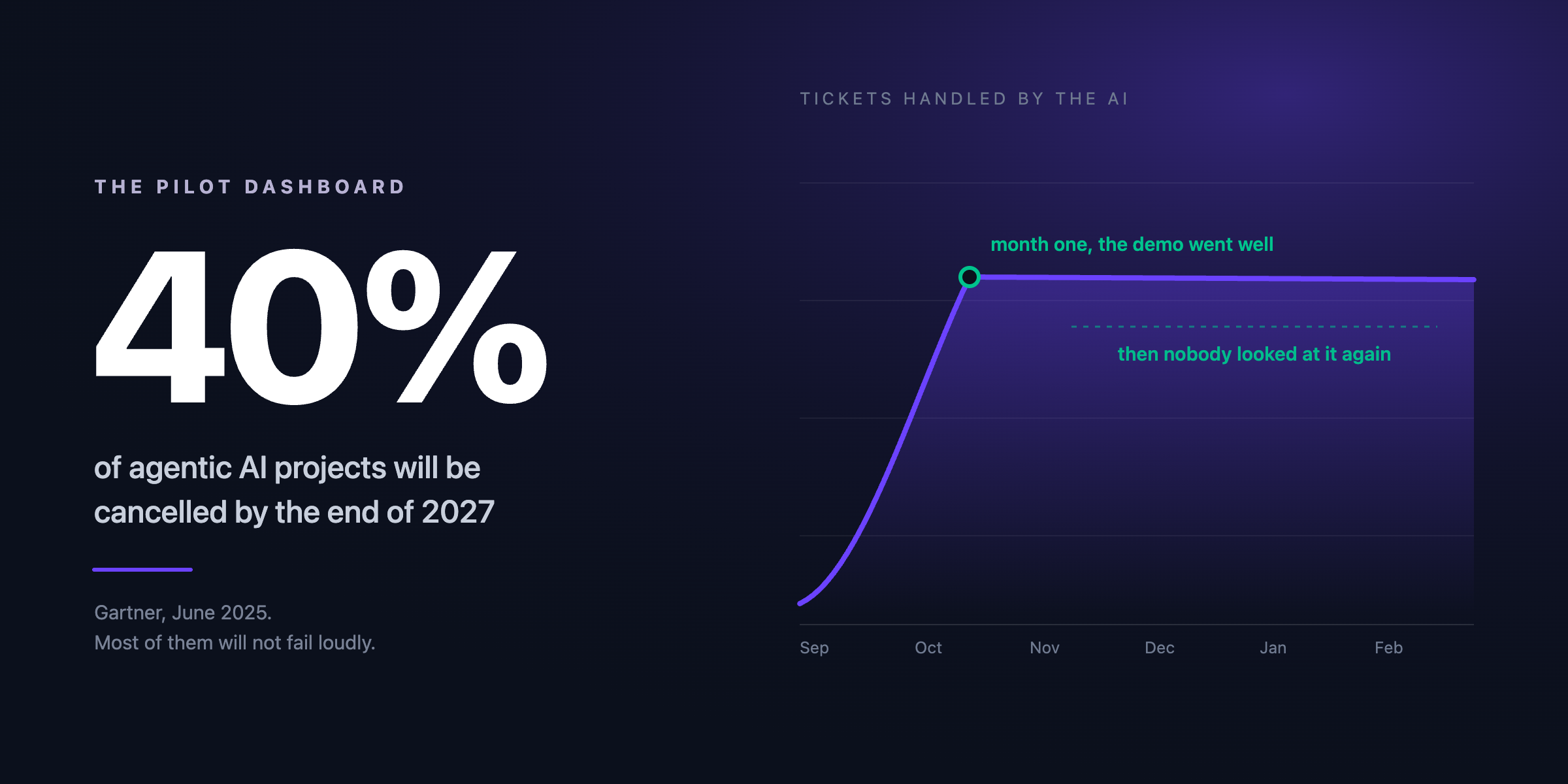
Why most AI support pilots stall
Most AI support pilots end with everyone losing interest, not with a decision. The three reasons we keep seeing, with Gartner and Klarna as the evidence, and what the pilots that survive tend to look like.
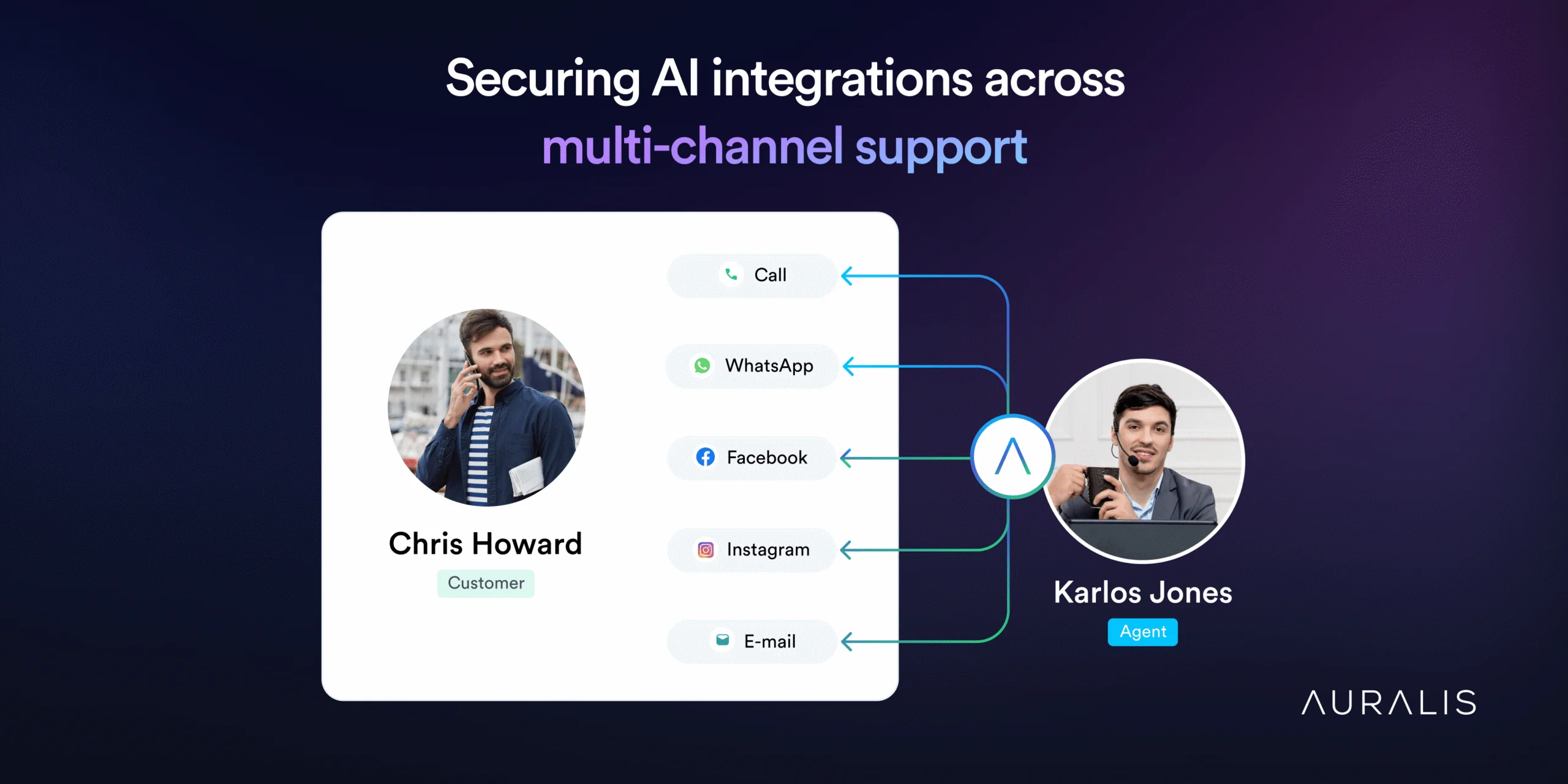
Securing AI Integrations Across Multi-Channel Support
Explore how to secure AI integrations in multi-channel support, protecting customer interactions across platforms.